Showing posts with label TRANSCULTURAL NURSING. Show all posts

Saturday, March 26, 2011

HOLY DAYS AND PRAYER

The Orthodox Jews begin their Sabbath before sundown Friday and ends after sundown Saturday. During Sabbath, work of any kind is prohibited including driving a car, using the phone, handling money, and even pushing an elevator button. The highest law demands that one must do everything to save a life. If someone cannot do something because of Sabbath, other alternative ways of accomplishing desired goal can be found. Times of prayer is important, therefore it is important to arrange a schedule with the client beforehand.

http://farm6.static.flickr.com/5137/5552801988_7d6a0a0ded_m.jpg
For Roman Catholics, Sunday is considered a day of obligation and requires attendance to Mass. When hospitalized, they are not required to fulfil this obligation.

In Islam, Holy days of worship extends from sunset on Thursday to sunset Friday. Some Muslims pray to Allah five times a day. Ramadan is 30 days of fasting from sun up to sundown to honour the prophet Muhammad. When praying, one must face Mecca. The patient’s bed or chair may be positioned in the Southeast direction.

RITUALS ON BIRTH, ON THE DYING, AND ON DEATH

Here are more trivial facts listed for you.

Circumcision is performed by a Jewish “Mohel” 8 days after birth during a religious ceremony with spiritual leaders present. While the Americans, which circumcision is done right after birth.

A dead Roman Catholic client is anointed with holy oil. Shrouding is not done until sacraments are performed. Prayers are offered at the time of death. Burial, cremation and autopsy are permitted.

http://farm1.static.flickr.com/165/359381330_1631e6fcb0_m.jpg
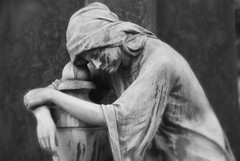
In Judaism, when death occurs, touching the body is not allowed for 8 to 30 minutes, and the body should be buried in 24 hours. A 7 day period of mourning called “Shiva” begins on the day of the funeral. At the home of the deceased, mirrors are covered, and waters should be emptied from standing containers. It is also avoided by looking at one’s grieving reflection. In Orthodox Jews, no autopsy or cremation is allowed, and all body parts are to be returned to the casket for burial whether if it is an appendix, finger, or uterus. Suicide is also forbidden. Flowers are not allowed at the grave instead stones are left.

The Hindus use Holy water to pour it in the mouth of the dying person. A Hindu priest is called at the time of death and may tie a thread around the neck or waist as a blessing. The eldest son arranges for the funeral and cremation within 24 hours. The family washes the body ready for cremation. Embalming is very much forbidden.

Muslim relatives and friend are present at death. Organ donation is not permitted. Men wash the body of the man, and women wash the body of the woman. Body is always positioned facing Mecca. And autopsy and cremation are forbidden.

Asians may invite mourners to the bedside to cry over the dead.

Hispanics may photograph the dead during wake and funeral.

Americans display strong denial and fear of death.

RELIGIOUS SYMBOLS

If the patient is wearing anything that looks unusual, may be jewelry, skin markings or tattoos, ear or tongue piercings, and any unusual objects, all of these needs to be assessed for religious or cultural practices. It will be helpful to note if these fall within the confines of his culture. Ask first!

Muslims wear a “taviz” – a black string with words of the Koran. It is best not to remove or get it wet.

http://farm2.static.flickr.com/1251/542761993_3cbb9214f2_m.jpg
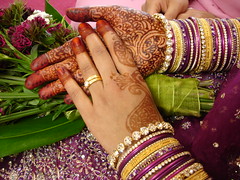
Hindus wear many sacred threads or bangles.

Mexican children wear bits of red ribbons for luck and protection.

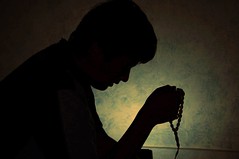
Roman Catholics wear or hold the Rosary beads or medallions.

Mediterranean individuals wear special charms on a chain.

Native Americans may carry medicine bundles.

THE HAIR

We are not going to talk about hair styling or hair stylists. In this part of transcultural nursing, I present you some trivial facts concerning about some patients and their hair. A patient’s hair may be as important as gold for him. Now check these out:

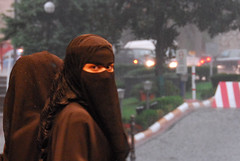
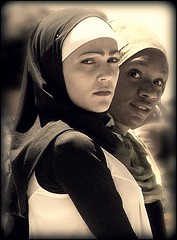
Muslim women cover their hair at all times.

http://farm3.static.flickr.com/2602/4134593322_280c8de9ed_m.jpg
Greeks link their body hair to manhood and virility.

In Sikh religion, cutting or shaving of any body hair is forbidden.

Orthodox Jewish women expose their hair only in private. Wigs are worn to cover hair in public. Men wear long side burns in curls and do not shave until they are married.

A Native American child's hair is a sign of health. Cutting or shaving the child’s hair brings bad omen. It is believed that it can bring sickness and death to the child.

HOW OTHER CULTURES PERCEIVE HEALTH AND ILLNESS

The Native Americans have a harmonious relationship with nature and the universe. Having a link with nature promotes good health, whereas illness is believed to be a cause from supernatural beings or a result from a witchcraft or black magic. Healers make potions for healing. They are very keen in using herbs to promote physical healing.

http://farm1.static.flickr.com/21/25466002_c9929d29d1_m.jpg
Europeans and Americans use scientific approach to provide physical proof as to how illness occurs. Proofs come in the form of germs (virus, bacteria, fungi, parasites), and to some sophisticated machineries which can provide physical evidence such as the use of genetics. Healing is given in by pills or medical surgery.

African Americans believe in supernatural forces of GOD and disharmony in relationships. Healing comes through prayer, mediation, wearing of talismans believing to ward off evil-causing-illness, and using of herbs.

Hispanics view illness as a punishment from GOD for man making acts of sin, or a result of the evil eye (mal de ojo). Healing involves a native healer (curendera) and the use of herbal potions.

Asians believe that the balance of yin and yang brings natural health, and when an imbalance occurs between the two forces this will cause an unwanted illness. Many healing comes in the form of acupuncture, herbs, cupping and burning – done by drawing blood to the surface of the skin when a warmed cup is placed on the skin. This cupping and burning technique often leaves a bruise. To them, this is also believed to draw out evil and illness in order to restore balance of the yin and yang.

FOOD AND DIETARY HABITS

Orthodox Jews prefer the kosher diet; however the diet is optional for Conservative, Reform and Reconstructive Jews. This diet contains no dairy and meat. Kosher foods are specially prepared and approved by religious inspectors. Consuming pork, predatory fowl or shellfish is forbidden. However, dairy and meat dishes may not be mixed such as cheeseburger, but a hamburger is considered. Some hospitals have kosher cafeteria that provides food for the Jews.

http://farm4.static.flickr.com/3377/3455167464_f04814b6a6_m.jpg
Roman Catholics fasts on Ash Wednesdays, Good Fridays, and on Fridays during Lent. They abstain from consuming meat.

Hindus forbid eating meat.

Muslims forbid pork and alcohol. They consider pork to be an unholy dish. They use their right hand for eating and they utilize their left hand for urinating and defecating. The nurse should offer medications to the right hand to avoid offending the individual. During the Ramadan, Muslims fast from sunrise until sunset therefore medications are to be given prior to fasting.

PERSONAL PRIVACY CONCERNING BODY COVERING

http://farm1.static.flickr.com/76/229054675_47abde58c7_m.jpg
Persons of orthodox faith like Christians, Jews, and Muslims are generally more concerned about modesty than non-orthodox people. The area between the waist and the knees is extremely sensitive for most persons, thus it is recommended in hospital policy or in any clinics that same gender nurses and physicians are observed. Examinations below the waist should be approached cautiously and with explanations regarding the necessity. Try to keep genitals covered or draped whenever possible. The patient involve may have same gender parent or preferably the mother present for examinations of children unless sexual abuses are suspected. Between Orthodox Jewish men and women, they avoid touching one another. They show modesty even in presence of the same gender.

Mormons attaining adult religious status wear the garment – short sleeved, long underwear that ends just above the knee. Considering this as sacred and always worn except when taking a bath or cleansing one’s body parts.

Middle Easterners value females for their purity and modesty. Each family honor is based on this considering as the highest value. Gender segregation is observed for female patients as for female nurses and male patients as for male nurses.

Muslims obey same gender housekeepers, nurses, and doctors. Some Islamic women prefer to be clothed from head to ankle. For female patients wearing whole body garments, the nurse should undress one body part at a time.

INTIMACY AND SPACE

Asians require touch with appropriate permission. In similar gender, it is acceptable to touch one another but not between opposite gender in public.

Arabians consider personal space and touch between the same gender, parent, and child. Holding hands and arm to arm should be between same genders only, and there is very limited touch between opposite gender in public.

Men kissing men on the parts of the face is common to Italian culture. This is even done in public since this type of intimacy suggests acceptance, friendship, and affection.
http://farm2.static.flickr.com/1172/4731874275_0862913926_m.jpg

Africans signify the act of touching as a form of familiarity. Most often this is protected and held back until relationship and rapport develops.

Americans and Europeans consider close physical space and touch as a sign of intimacy. The use of touch is very common between women and public signs of affection between a man and a woman, such as kissing, is very much accepted.

RELIGIONS’ RESTRICTIONS AND CONSENT CONCERNING MEDICAL TREATMENT

http://farm4.static.flickr.com/3564/3518127437_5b80783998_m.jpg
Roman Catholics forbid the use of birth control such as fertility treatments using artificial means of insemination or fertilization. The religion restricts abortion, tubal ligation, vasectomy, and they say no to contraception.

Christian Science believes in prayer and readings of Mary Baker Eddie invoking healing. It is in their doctrine that medical interventions are not tolerated.

The Jehovah’s Witness limit the source of accepting medical intervention. It is forbidden to them the use of blood transfusion and abortion.

Orthodox Jews forbid organ donation. Autopsy is also forbidden because they believe that tampering with the dead body will cause sorrow for the soul not entering heaven. In such cases of these problems develop to forensic teams which delay their research findings for legal proceedings and for evidence.

TRANSCULTURAL NURSING

http://farm4.static.flickr.com/3502/4036891004_dac188c495_m.jpg
Transcultural nursing doesn’t really imply that you are required to know everything about every cultures or cultural groups to work with. However, it does mean that you should be aware about necessary factors such as person’s country of origin, his main preferred language, his religion his age, method of communication, his view on health, what type food he prefers, about his family and community relationships.

A fine nurse learns all these by asking appropriate questions. Come to think of it the nurse’s main objective is to deliver more efficient care while improving the response to client treatment.

In the world of transcultural nursing, there are a lot of aspects to culture and spirituality always comes in hand. One among many knacks to learn is how your client or patient views appointments or schedules. How is he oriented to time? Americans are very punctual when it comes to scheduled events. African Americans are oriented to the “NOW” aspect. They prefer not to be specific when it comes to time. The Native Americans are not used to clocks that they live one day most at a time. Hispanics and Germans are very much approximate in enjoying rest periods. Asians pay absolute respect for the past and how it influences their present time.

When it comes to communication you can learn how to read people and tell from where they grew up. The Americans are very used to firm handshakes when greeting someone. They demonstrate direct eye contact which expresses self confidence, interest and honesty. American and European women are inclined to facilitate communication with questions while men are more direct and affirmative. The Hispanics dramatize the way they communicate by using body language to express feelings and emotions. Their common gestures are with the use of their hands. Disagreement and passing of judgment is not very much openly expressed by Asians, and they value silence pretty much. Extreme eye contact is considered rude and touching is not always giving positive caring demonstration, particularly in touching the patient’s head without any permission. No eye contact is a respect common to Native Americans. The Middle Eastern folks consider direct eye contact between a man and a woman to be a sexual enticement. To avoid any wrong impressions its best to avoid direct eye contact to the opposite sex.

Gestures connote different meaning in different cultural setting. Motioning someone to come may indicate a different meaning. A lack of response may mean a yes or a no to someone. Refusal to touch may mean a basis for privacy. To avoid imprecise and doubtful impressions the best way is to be simple, clear and specific, and do not use colloquial speech which may cause confusion. Always follow up with questions to determine his understanding. Ask questions and let them demonstrate to ensure proper understanding. In some instances when there are language barriers, do not use family members or client’s friends to interpret for him. The usual are inclined to give their own thoughts, observations, or feelings which may not be connected to the case of the client. In cases like these, call for a neutral interpreter. And while you continue your care the universal sign for caring is to smile.